Skin Studies: Mapping What The Body Holds
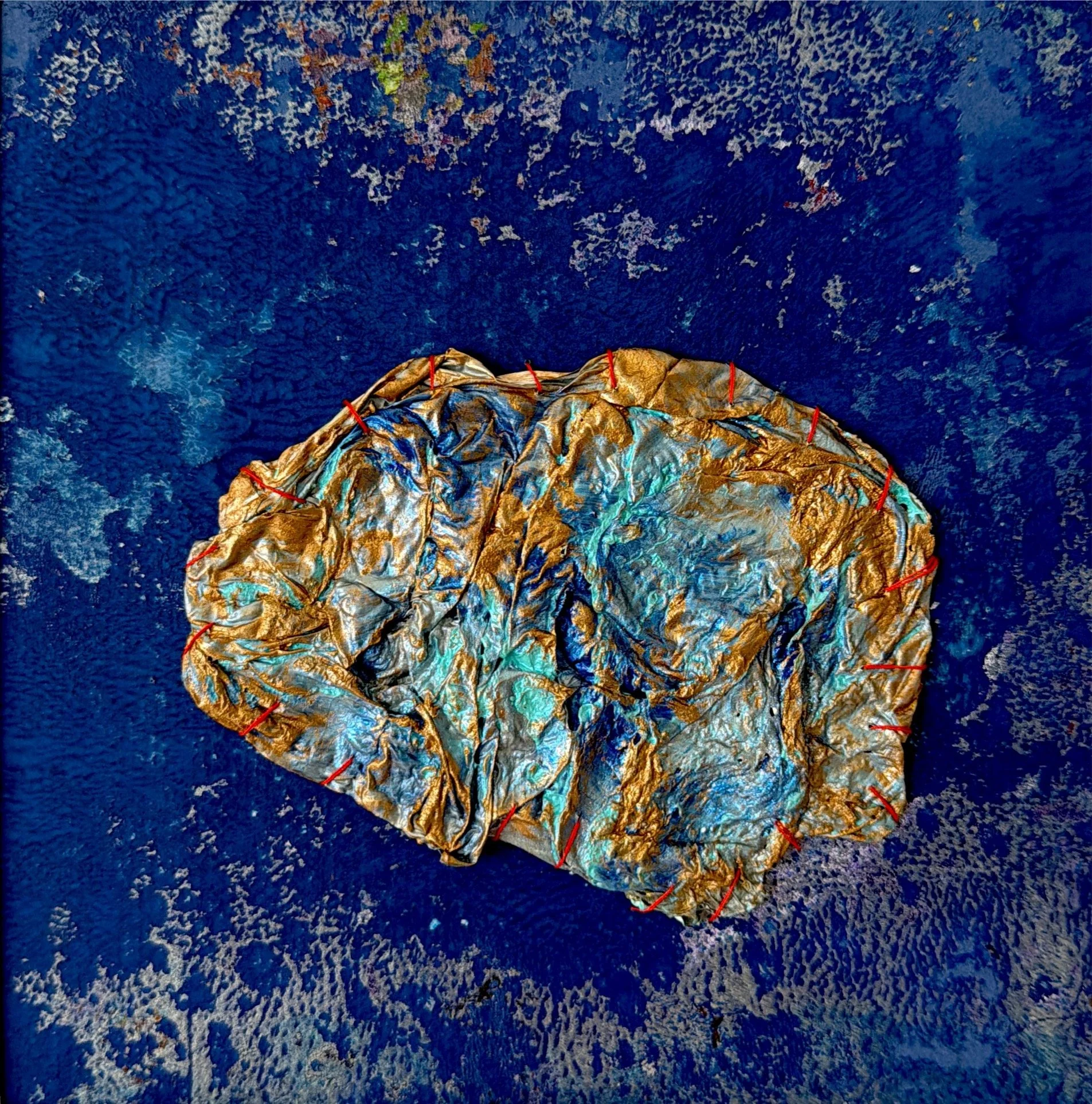
Sacred Relic (2026): synthetic packaging, acrylic, saffron thread; warped with heat gun.
Skin has become a new area of curiosity in my studio — and the more I sit with it, the more it fascinates me.
Skin is our largest organ. It is also our most liminal — the membrane between our inner world and everything outside it. It absorbs pressure, weathers exposure, carries history. And it does all of this without ever showing it. The marks are there, but invisible. The transformation is constant, but concealed.
That invisibility is what drew me in. What would it look like if we could actually see what skin holds?
I started looking at materials around me that share skin's qualities. Japanese blotting paper — absorbent, designed to take things in. Synthetic materials from Amazon delivery packaging — built to protect and contain items in transit. Dryer lint — holding skin cells, hair, and fiber, the physical residue of a life being lived. Metallic paint — shield, armor, protection made visible.
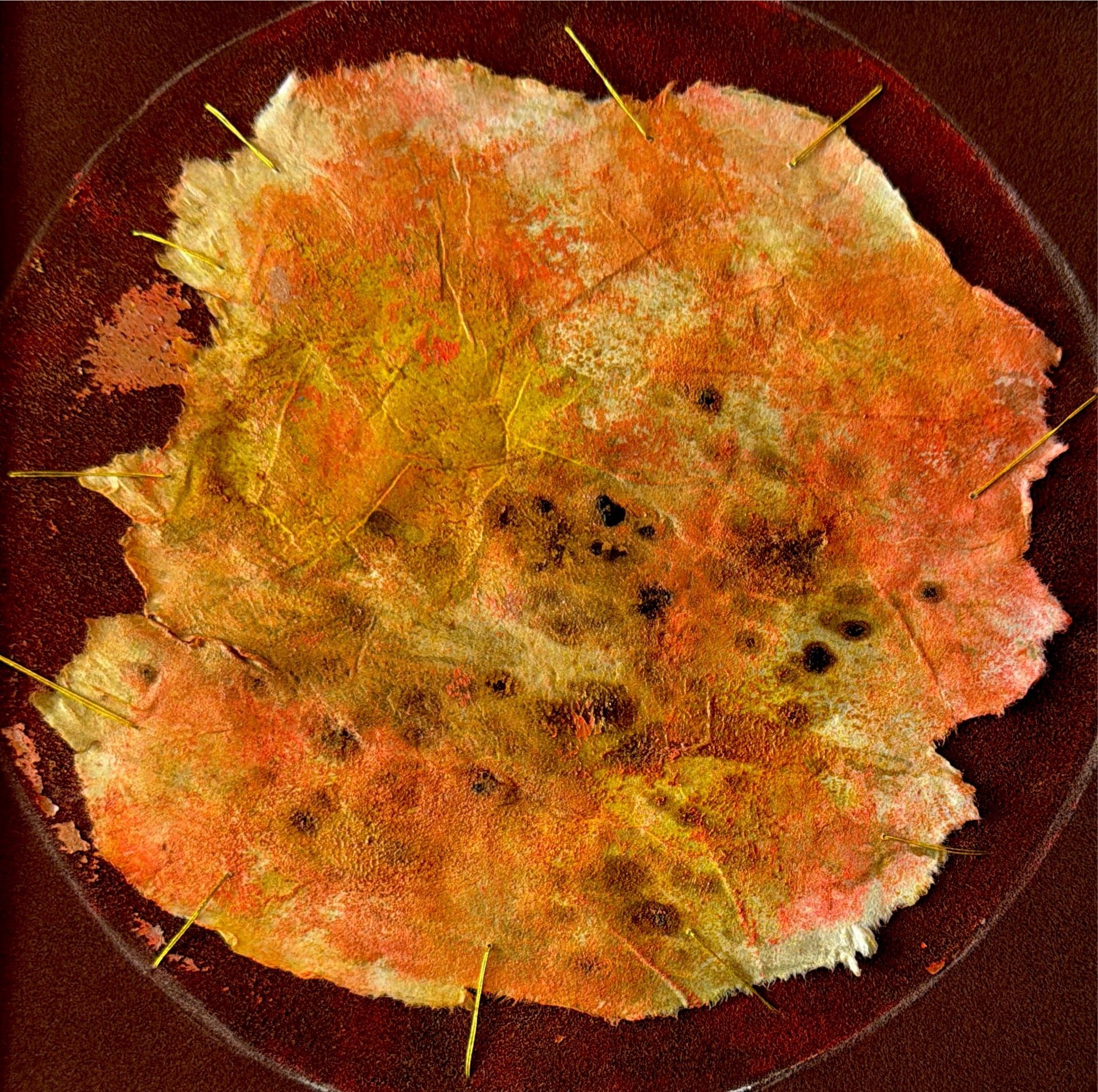
Bearing Witness (2026): Japanese blotting paper, coffee grounds, tea leaves, turmeric, ash, metallic paint, gold thread, velvet.
I then subjected these materials to what skin goes through — pressure, stress, scarring, wrinkling, sun and heat exposure. And I watched what happened. How they transformed through a process I could only partially control. How they became something unexpected, and beautiful.
Some of these skins are translucent and delicate. Others have hardened into something altogether different — scaled, armored, iridescent. The kind of surface that has taken everything and grown stronger and more luminous because of it.
Mounted on velvet with gold zari thread, each work is at once a specimen and altar — ordinary materials transformed into something worth studying and honoring. The scale is deliberately intimate, inviting viewers to step closer and perhaps think about their own skin — the pressures absorbed, the histories carried, the transformations no one witnessed.
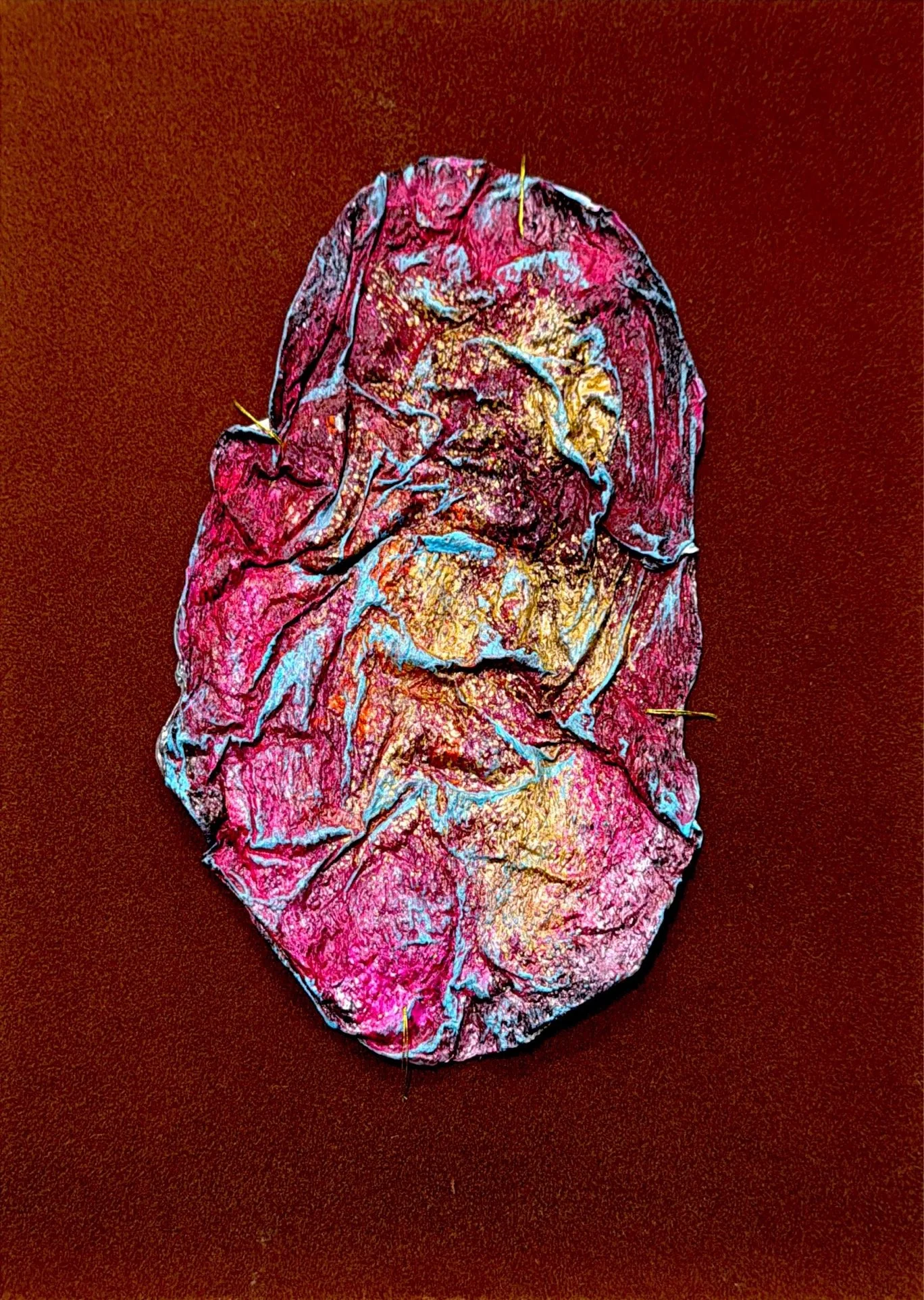
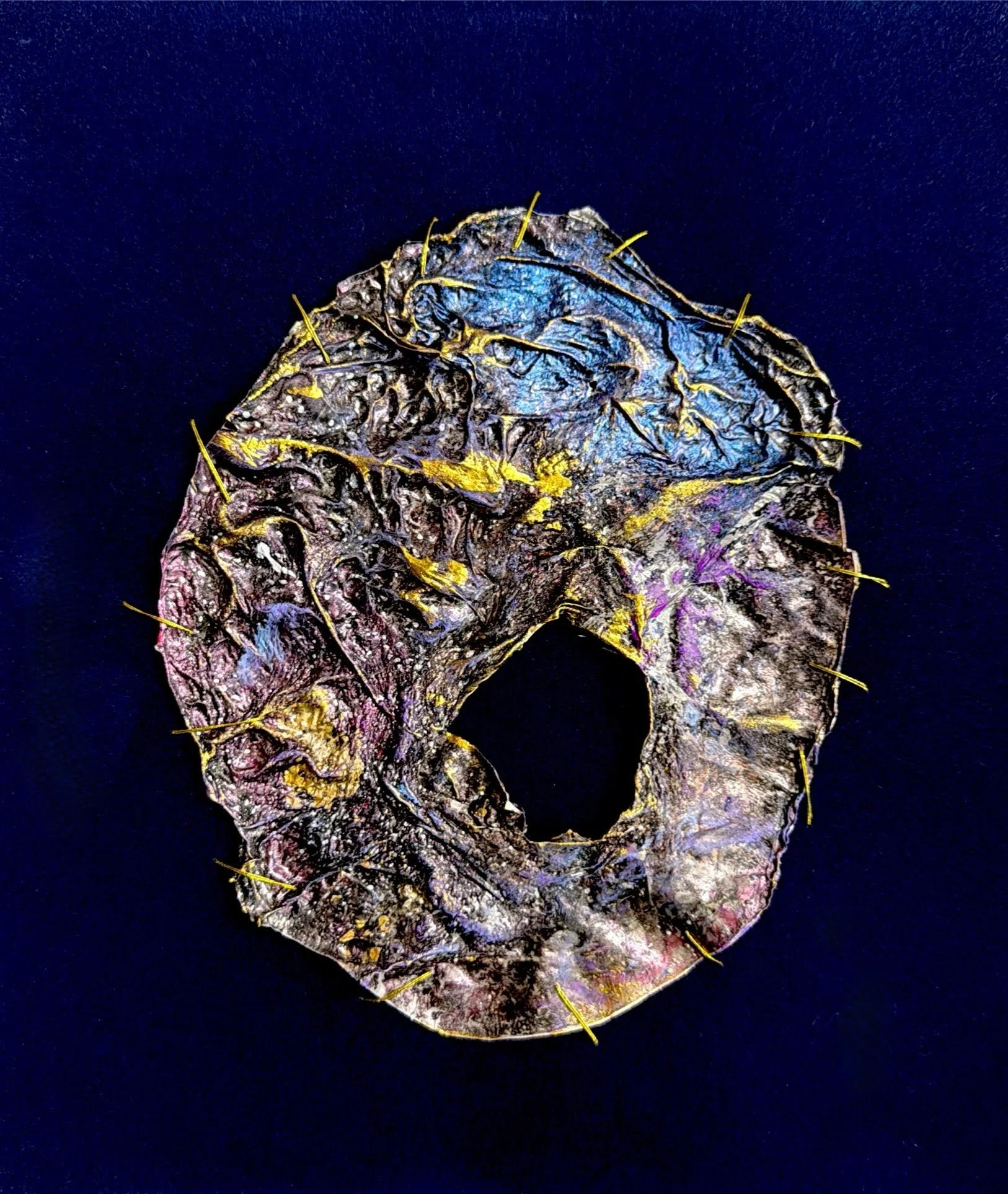
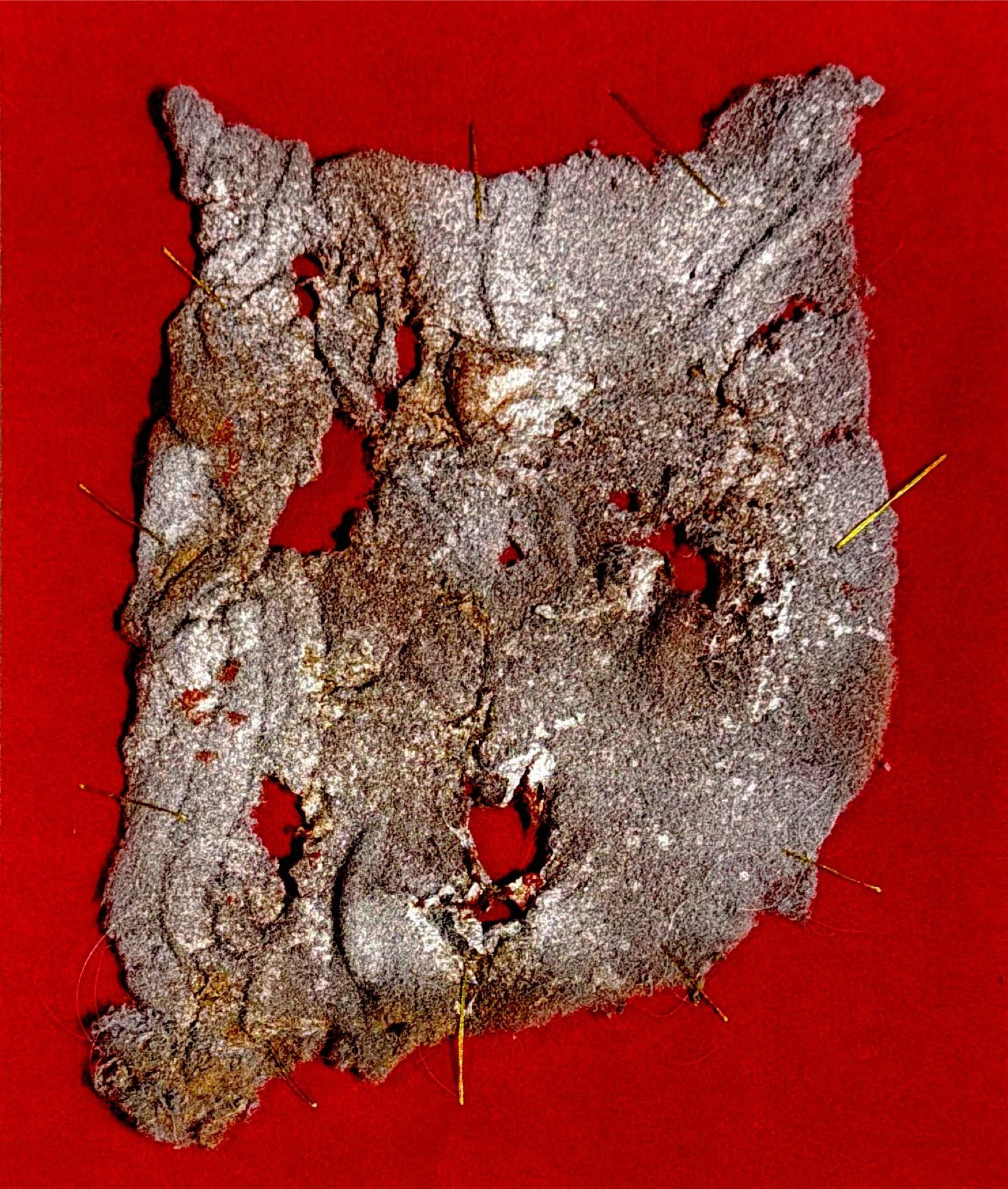
By making the invisible visible — familiar and strange at once — I hope to open something. A moment of recognition. An awareness of how much we all carry without it ever being seen. And yet. Given the right conditions, fractured skin can morph into luminous dragon scales worth beholding.
The series is still evolving. I am curious to see where these skins lead.
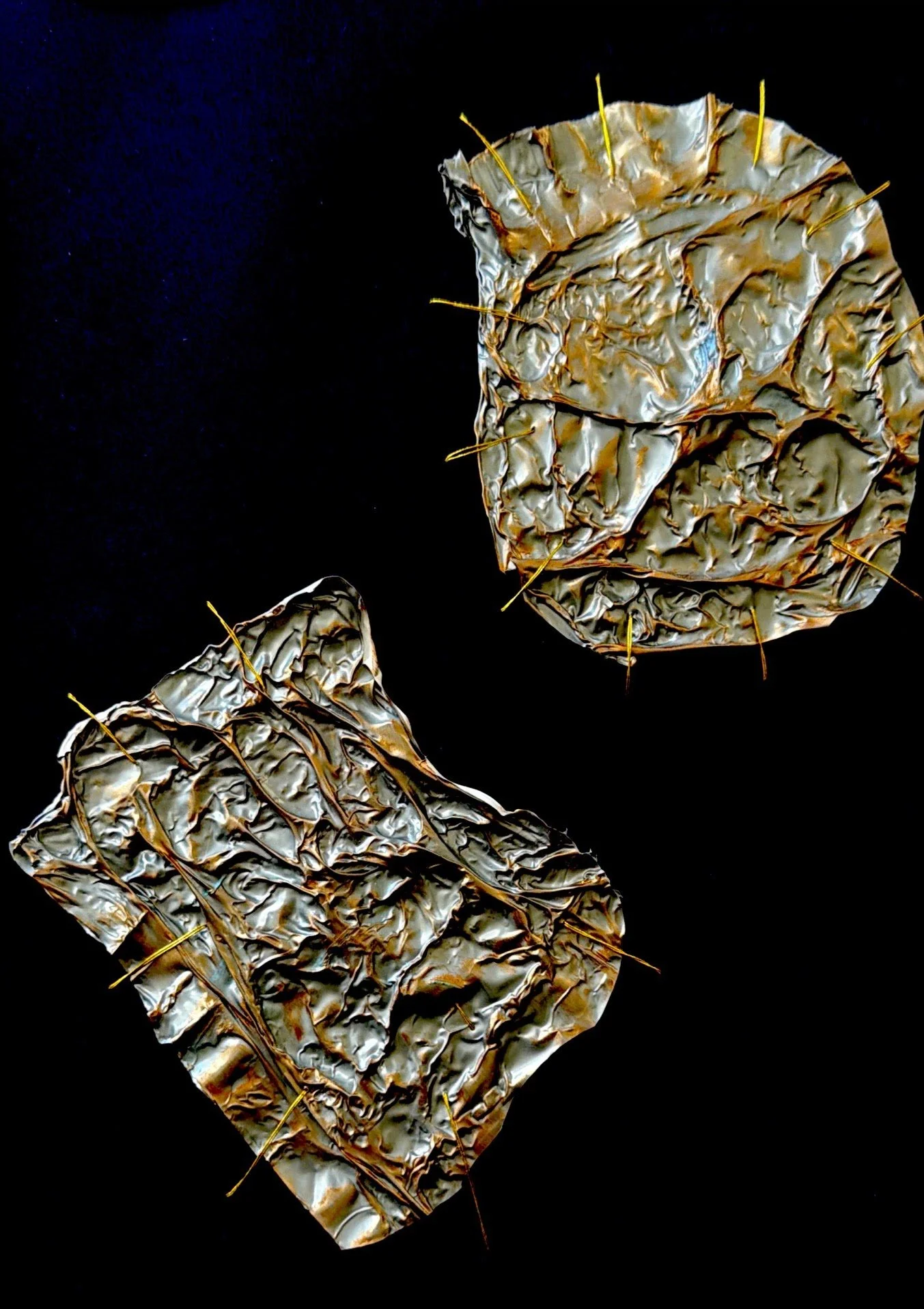
Our Dragon Skins (2026): Hazmat suit material, exposed to cutting, stretching, heat, and pressure. Capturing how I feel when I see and try to mirror my own child’s bravery and resilience in a world not designed for people like them.