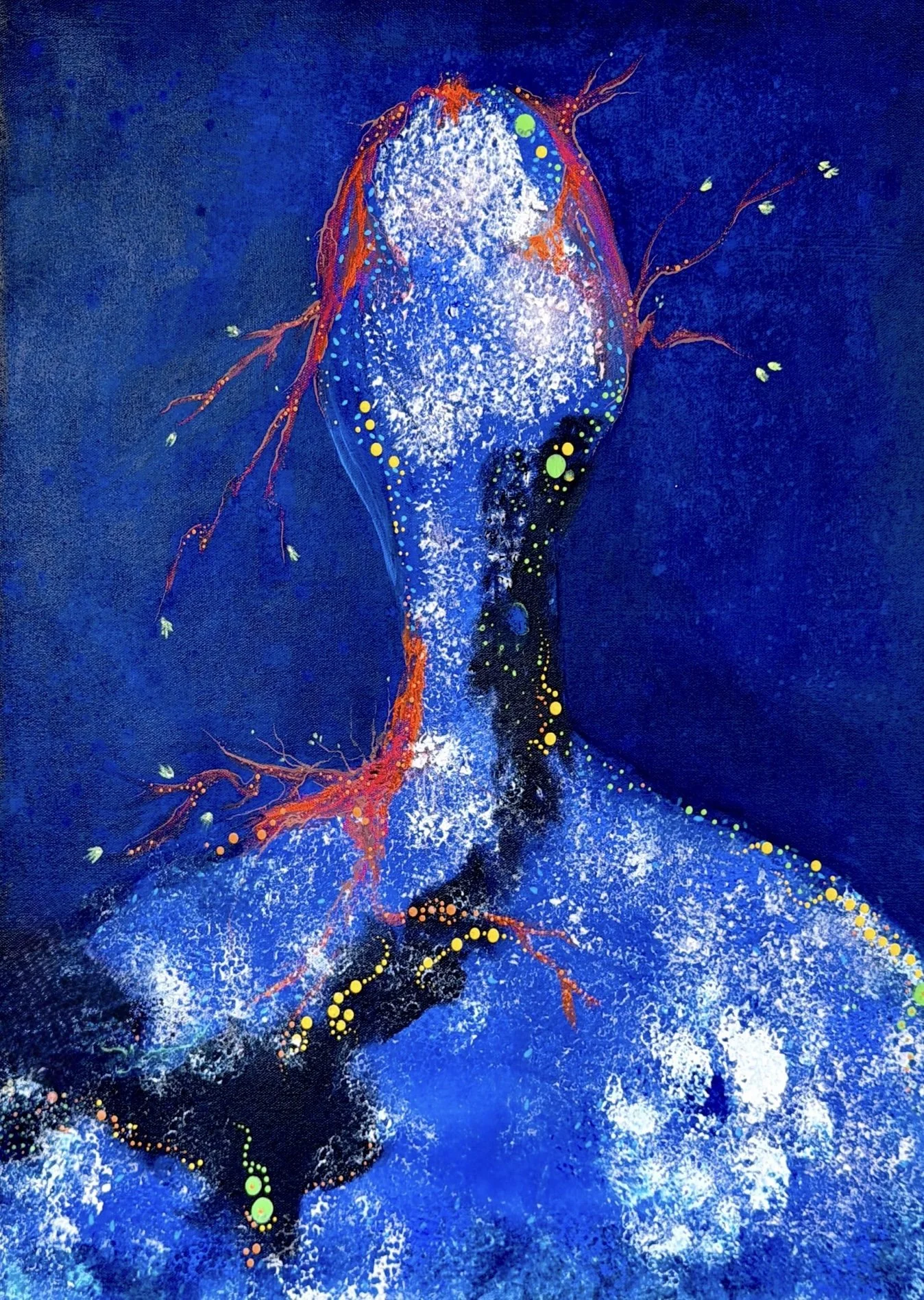
All The Worlds I Carry, 2026
I began thinking about faceless portraits while traveling. Passports, visa applications, immigration checkpoints: again and again, I was asked to present myself as a face. A photograph clipped to a form. A camera at the border that scans my features and matches them against an image taken years ago.
I became fascinated by the extraordinary authority we grant to an image of a face. A passport photograph can determine which borders we cross and which rights we can claim. The same tiny, flat image appears on student IDs, driver’s licenses, and corporate badges used by institutions to recognize and classify us. Yet it reveals almost nothing about who we are.
It cannot communicate the places we have called home, the languages that inhabit our thoughts, the experiences that have changed us, or the contradictions we carry. It cannot capture the many identities that coexist within a single person, sometimes comfortably, sometimes uneasily.
I started wondering what would happen if I removed the face from a portrait altogether. Could I imbue a faceless figure with individuality, inviting curiosity and connection despite the absence of recognizable features?
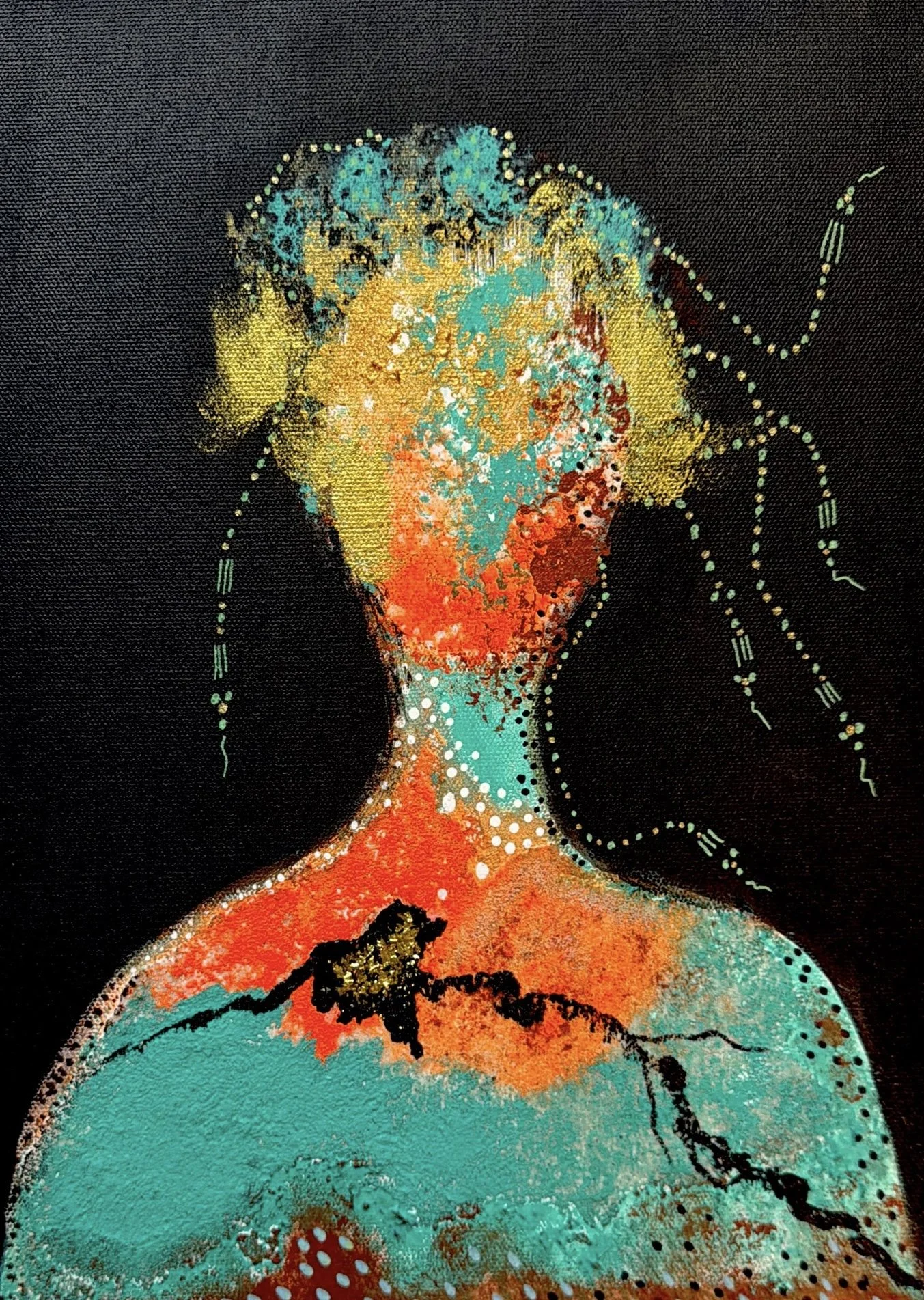
A Field Guide to Becoming, 2026
That challenge became central to my Skin Portraits. In these paintings, faceless human figures become canvases for layered colors, textures, fissures, and organic forms. Their skin carries the marks of imagined histories, transformations, and inner lives that no identification photograph could reveal.
By removing the face, I invite the viewer to look beyond the familiar markers of identity—to consider not just what makes us recognizable, but what makes us human.